
Concrete Slabs in Seattle, WA
Solid Foundations for Every Structure
Concrete slabs are the foundation for all types of construction projects, from a new garden shed to a house addition. King Concrete Seattle pours concrete slabs that will remain even and steady with whatever is built on top of them, as well as withstand Seattle’s extreme weather conditions.
When I see some of the poor-quality slab work that some contractors do, it causes serious structural damage, such as settling foundations, cracking floors, and serious moisture problems that can cost thousands to repair. The problem isn’t the quality of the concrete used; the problem lies in poor base preparation, lack of drainage, or using the incorrect amount of thickness of the concrete based on the type of soil you’re working with.
We pour concrete slabs properly the first time. We prepare the base by excavating it and compacting it so that it won’t settle under the weight of the building. Then we add reinforcement to the slab to meet the load requirements for the building. Finally, we add drainage to prevent water from accumulating around the building. King Concrete Seattle has poured many concrete slabs that have supported their clients’ projects for years to come without any major structural issues.
Get A Free Quote
What is a Concrete Slab?
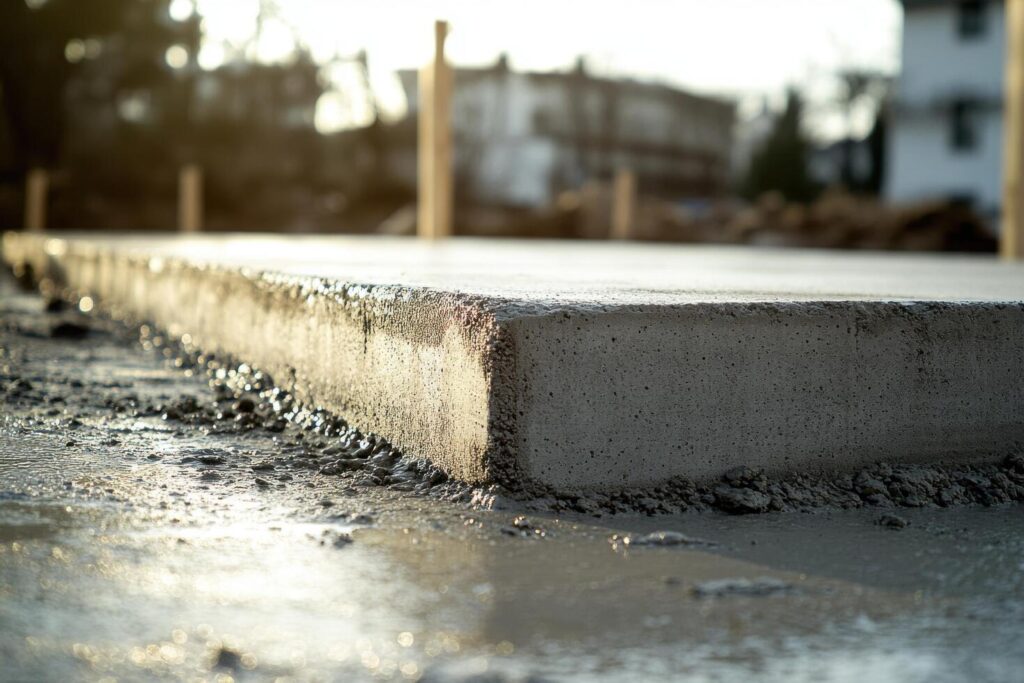
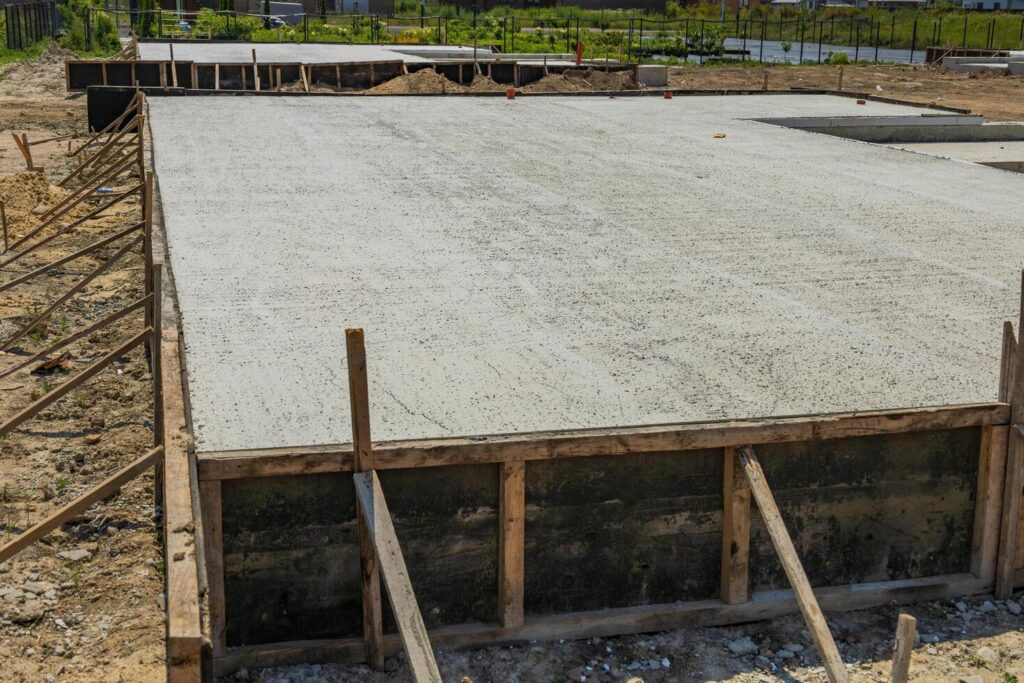
A concrete slab is an essentially horizontal and solid surface of poured concrete. The purpose of a concrete slab is to serve as the foundation upon which buildings are constructed, or alternatively as a long-lasting flooring system. Concrete slabs provide uniform load distribution on the earth in order to prevent settlement of the structure. Additionally, they create a stable area in which structures may be built.
Seattle’s heavy clay soils will present unique obstacles to installing concrete slabs. As clay absorbs water, it will expand, and when the clay dries, it will contract. This creates pressure on the slab, causing cracks to form if not properly engineered into the design of the slab. We consider these types of movements with proper subgrade preparation, sufficient slab thickness, and strategically placed reinforcement.
Concrete Slab Design Options
We create a custom concrete slab for your needs by assessing your site conditions and the intended use of the slab:
Standard flat slabs – A simple and common slab design for garages, sheds, and general-purpose foundations with thicknesses between 4″ – 6″ (depending on loads)
Thickened edge slabs – An edge is thickened to provide an additional amount of support along the edges. Typically used in structures built upon expansive soils.
Monolithic slabs – The foundation and the floor slab are created in one pour. Commonly used in the construction of small additions or smaller buildings, such as sheds.
Floating Slabs – A floating slab sits on top of a bed of compacted base material and does not require footings. Used for certain types of soils and lighter structures.
We assess the soil at your location, as well as your location’s drainage and your structure’s requirements, to determine which design will be best suited for you.
Our Concrete Slab Installation Process
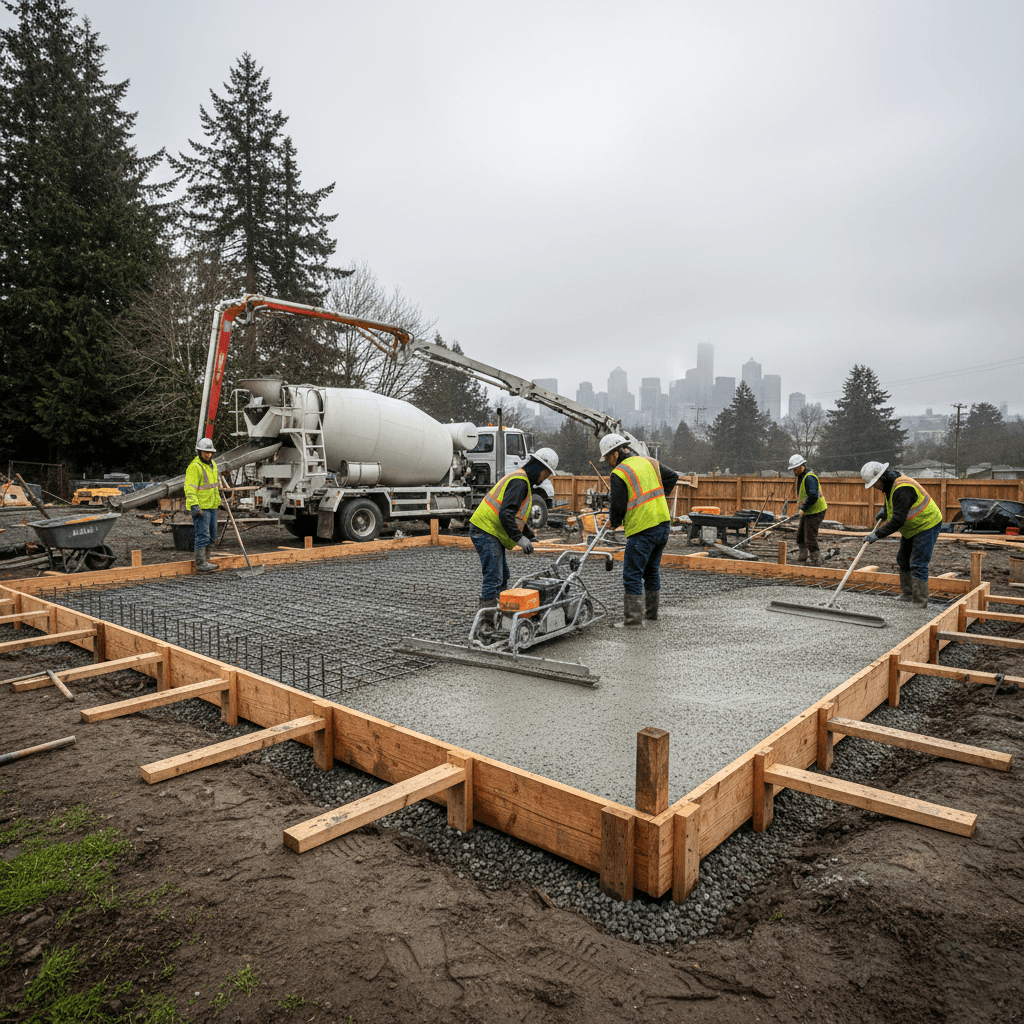
- Site Evaluation: We assess soil conditions, existing drainage, and structure requirements. This determines excavation depth, base material needs, and reinforcement specifications.
- Excavation: We dig to the required depth, typically 8-12 inches below the final slab surface. Depth accounts for base material, moisture barrier, and slab thickness.
- Base Preparation: A compacted gravel base provides stable support and drainage. Seattle’s clay soil requires this aggregate base to prevent settling and manage moisture.
- Moisture Barrier Installation: We install vapor barriers to prevent ground moisture from penetrating the slab. This is particularly important for heated spaces or finished floors.
- Form Setting: Precise forms ensure proper dimensions, level surfaces, and clean edges. We double-check measurements and grade.
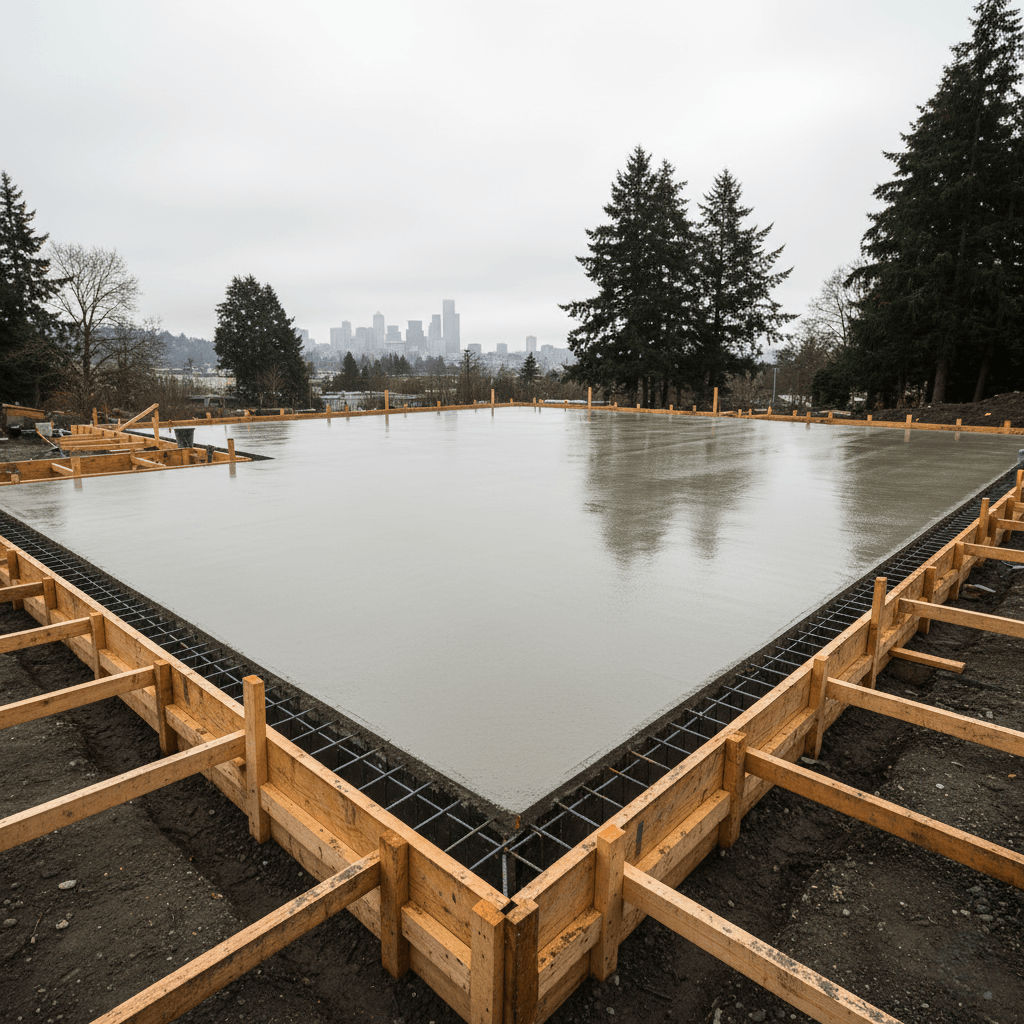
- Reinforcement Placement: Rebar or wire mesh reinforcement prevents cracking. We position reinforcement in the lower third of the slab for maximum effectiveness.
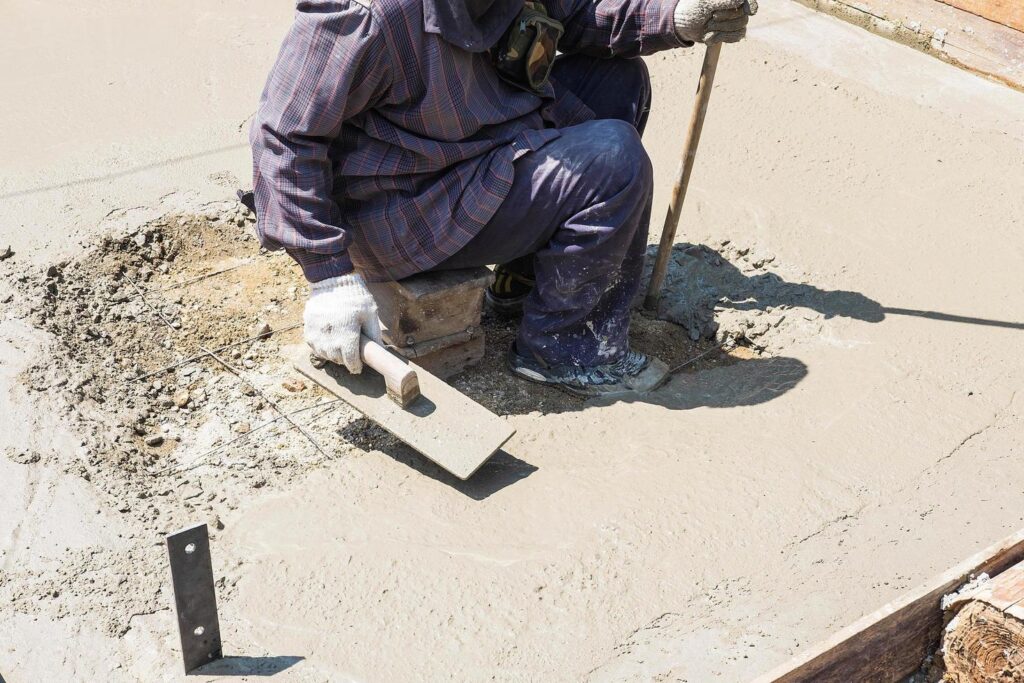
- Concrete Pouring: We use concrete mixes with appropriate strength ratings. Proper placement and consolidation eliminate voids and ensure uniform density.
- Finishing: We level and smooth the surface, creating the appropriate finish for your application—smooth trowel, broom texture, or prepared for coatings.
- Control Joints: Strategic control joints manage shrinkage cracking, keeping cracks straight and in planned locations.
- Curing: Proper curing develops full concrete strength. We protect slabs during curing and recommend waiting periods before loading or construction.
Concrete Slab Applications
Concrete Slab Around House
Perimeter Slabs create a clean, low-maintenance area around the outside of your house foundation. Several advantages exist with the use of a concrete slab:
- Prevents vegetation from growing up against your siding
- Provides stable access to the foundation for maintenance
- Improves drainage and directs water away from the foundation
- Creates an additional area for seating or storing equipment outdoors
We slope these slabs so water runs off toward the street rather than toward your house, preventing moisture damage to your home’s foundation.
Concrete Slab for Garden Shed
Garden sheds require a solid, level base. Concrete slabs for garden sheds help to prevent sagging of the floor of the shed, misaligned doors, and moisture intrusion under the shed.
We size our slabs according to the needs of each shed — usually making them at least 6-12″ larger than the footprint of the shed in all directions to allow for drainage and access to the shed.
Concrete Slab for Around Pool
Concrete slabs are beneficial for creating level surfaces for pool equipment, lounge areas, and pathways. The installation of the slabs will be designed to withstand moisture and provide support to any heavy loads.
We have to incorporate adequate drainage design in order to handle the splashing of the pool water and to keep water from collecting around the pool equipment.
Concrete Slab for Shed
Whether you’re installing a storage shed or a workshop, we install concrete slabs for sheds, which provide solid bases for your structure. Thick enough and reinforced properly to prevent cracking from the weight of tools and equipment, and we can also include anchors as part of the process when we pour the slab, so they can secure the shed structures.
Why Choose King Concrete Seattle for Concrete Slabs
Concrete Slab Experience in Challenging Clay Soils of Seattle: We have poured many concrete slabs in King County and know how difficult it is to pour a quality concrete slab in this area due to the clay soils we have. Our methods of preparing and reinforcing the base prevent the settling and cracking often associated with poor-quality installation.
Engineered Slab Thickness: When pouring a concrete slab, we do not “cut corners” on the thickness of the slab. Each slab is designed and engineered to perform based upon its intended use (i.e., light storage or heavy equipment).
Base Preparation Quality Control: The quality of the base will determine the performance of your slab over time. Our process involves excavating to the correct depth, using the proper type and amount of aggregate, and thoroughly compacting the base.
Water Drainage Design: Seattle’s rainfall can be severe and, therefore, requires the design of each slab to include grading, which will direct water away from the structure.
One Contractor: From excavation to finish work, we provide you with one contractor to manage your complete project.
Compliance with Building Codes & Inspection Requirements: Our concrete slab contractors are familiar with the building codes and inspection requirements of the City of Seattle. We will coordinate with the city inspectors and ensure code compliance.
Request Your Free Estimate
We respect your privacy and will never share your information.
Ready to Start Your Slab Project?
Whether you need a foundation for a new shed, a garage floor upgrade, or a house addition slab, we deliver quality results.
Fill out the Form, Our Team will contact you!